Trends, checked
Baking Soda Water for Weight Loss: What's Known and the Sodium Risk
Baking soda water is cheap, easy and all over social media. The question worth asking isn't only “does it work?” but “what does it cost my body?” Here's an honest look at both.
The short answer
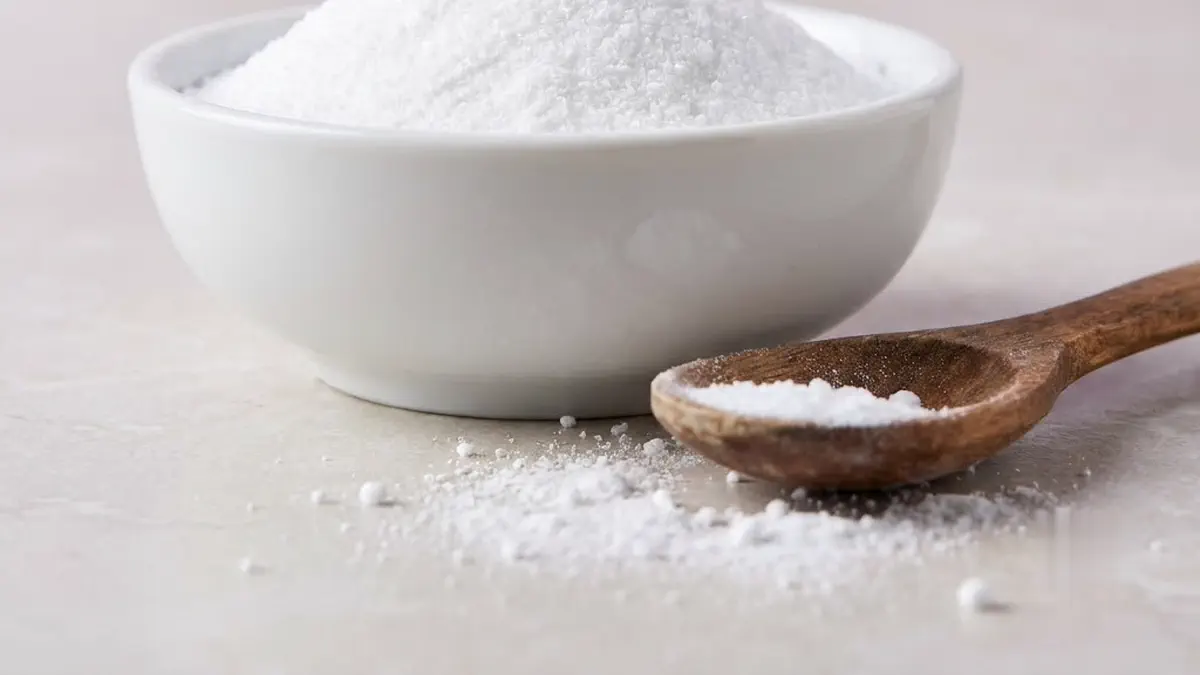
We couldn't find good evidence in people that drinking baking soda water reduces body fat, speeds up metabolism or lowers appetite in a meaningful way. What baking soda reliably does is neutralize acid. That makes it an old-fashioned antacid for occasional heartburn, which is useful in its own lane, but it isn't a weight-loss tool.
If you feel lighter or less bloated after a few mornings of it, it's worth asking what else changed. People who start a “morning ritual” often eat a smaller breakfast, drink more water or pay closer attention to what they eat for the rest of the day. Those changes can matter. The baking soda is the least likely reason.
How much sodium is in baking soda?
This is the part most videos skip. Baking soda is sodium bicarbonate, and a large share of its weight is sodium. The nutrition panel on a typical box lists about 150 mg of sodium per 1/8 teaspoon. That works out to roughly 1,200 mg in a single level teaspoon.
| Baking soda | Approximate sodium |
|---|---|
| 1/8 teaspoon | About 150 mg |
| 1/4 teaspoon | About 300 mg |
| 1/2 teaspoon | About 600 mg |
| 1 level teaspoon | About 1,200 mg |
For comparison, most adults are advised to keep total sodium under about 2,300 mg a day, and many people with high blood pressure are given a lower target. Most Americans already go over that limit from food alone. A daily baking soda drink adds to it.
Other risks to know
Acid-base balance
Your body keeps blood pH in a tight range. Taking large amounts of sodium bicarbonate, especially repeatedly, can push it too far toward alkaline, a condition called metabolic alkalosis. Symptoms can include muscle twitching or cramps, nausea, confusion and an irregular heartbeat. It's uncommon at small doses, but it's a good reason not to improvise with bigger amounts.
Gas and the stomach
Baking soda reacts with stomach acid and releases carbon dioxide. That's why it can cause burping, bloating and cramps. There are rare reports of serious stomach injury when large amounts were taken after a very large meal, which is why antacid directions warn against taking it when your stomach is overly full.
Medications
Like other antacids, baking soda can change how some medicines are absorbed, including certain antibiotics and iron supplements, and its sodium can matter for people on blood pressure or heart medication. If you take any prescription, ask your pharmacist how to space them, or whether to skip baking soda altogether.
Who should avoid baking soda water
- Anyone with high blood pressure, heart failure or kidney disease
- Anyone on a low-sodium diet or a fluid restriction
- People who are pregnant, unless their doctor recommends it
- Children
- Anyone taking medications that interact with antacids, without checking first
What tends to help more
If the real goal is fewer cravings and a steadier appetite, the habits with better support are less exciting and more effective over time: meals built around protein and fiber, regular eating times instead of long gaps, enough sleep and movement you can keep up. Our guides to supporting GLP-1 naturally and quieting food noise walk through them step by step.
And if you're weighing medical options, including prescription treatments, that's a conversation for your doctor, who can look at your blood pressure, kidney function and medications together.
If your doctor says an occasional dose is fine
- Use it the way the box describes, as an occasional antacid, not as a daily weight-loss drink.
- Measure with a real measuring spoon instead of eyeballing it, and dissolve it completely in water.
- Don't take it right after a big meal.
- Ask your pharmacist how far apart to keep it from your other medicines.
- Stop and get medical advice if you notice swelling, muscle cramps, confusion or an irregular heartbeat.
Bottom line
Baking soda water is a fizzy way to take an antacid. It isn't a proven weight-loss method, and its sodium makes it a poor daily habit for many adults over 40, the group most likely to be watching their blood pressure. If you try it at all, keep it occasional, follow the label and check with your doctor first.
Frequently asked questions
Does baking soda water help you lose weight?
There's no reliable evidence that it does. Baking soda neutralizes acid, so it can ease occasional heartburn, but studies haven't shown that it reduces body fat or appetite in a meaningful way.
How much sodium is in a teaspoon of baking soda?
Roughly 1,200 mg in a level teaspoon, based on the typical box label of about 150 mg per 1/8 teaspoon. That's about half of the daily limit most adults are advised to stay under.
Who should not drink baking soda water?
People with high blood pressure, heart failure or kidney disease, anyone on a low-sodium diet, pregnant women unless their doctor advises it, children, and anyone whose medications interact with antacids.
Is it better with lemon or apple cider vinegar?
Not for weight. The acid reacts with the baking soda and neutralizes part of it, creating fizz. It may taste better, but it adds no fat-burning effect, and the sodium is still there.
Keep reading
 Trends, checked
The Baking Soda Trick: What It Is and What It Can't Do
What the viral baking soda trick actually is, why it spread so fast, what baking soda really does in your body, and the sodium limits to know before trying it.4 min read Appetite science
Food Noise: What It Is and Practical Ways to Quiet It
Food noise explained: why some people think about food constantly, what drives it, practical ways to turn the volume down, and when it's time to ask for help.4 min readThis article is general information, not medical advice, and it doesn’t replace a conversation with your doctor or pharmacist. Last updated November 3, 2026. Spotted an error? Write to support@sodatide.blog.